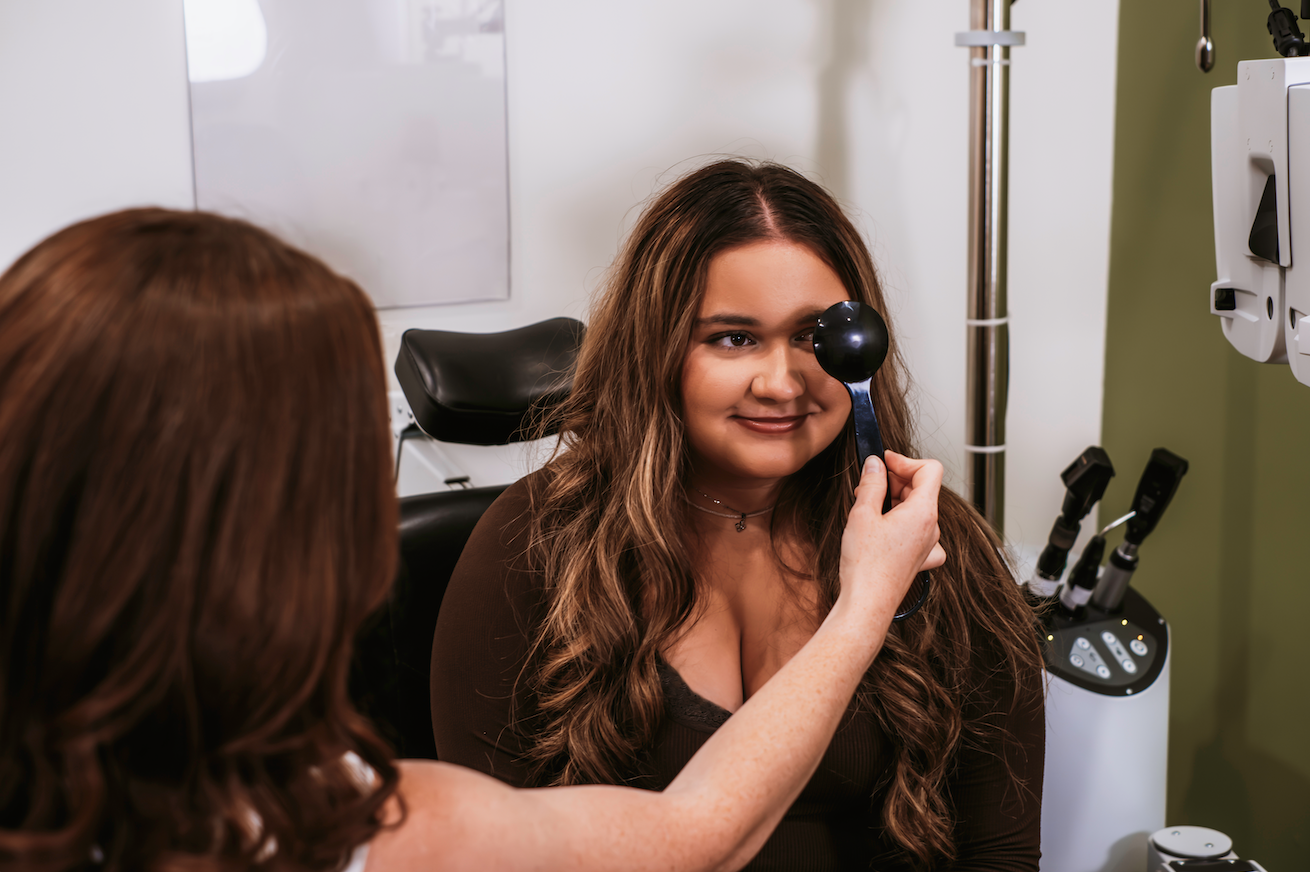
Even if your vision feels fine, your eyes might be telling a different story. From subtle discomfort to major changes, our eyes often give us clues that it’s time for a check-up.
Blurriness, fatigue, or headaches might seem minor, but your eyes could be hinting that they need a little extra care. At Aurora Eye Care in Grande Prairie, we believe in proactive, personalized vision care that goes beyond “can you read the bottom line?” Because your eyes aren’t just about seeing clearly; they’re about living comfortably, confidently, and fully.
Here are five signs it’s time to book your comprehensive eye exam and what you can expect when you visit our team.

1. Blurry Vision or Difficulty Focusing
If you’ve started holding your phone a little farther away or find yourself squinting to read menus, you’re not alone.
Blurry vision or difficulty focusing can happen for a number of reasons. Sometimes it’s as simple as an outdated prescription, but it can also signal more complex changes like cataracts, glaucoma, or dry eye disease.
At Aurora, we take a whole-patient approach to uncover the why behind your symptoms. During your exam, our eye doctors will assess your visual acuity, eye coordination, and overall eye health using advanced diagnostic tools. Whether you need a prescription update, dry eye treatment, or specialized care, we’ll guide you toward the clearest and most comfortable vision possible.
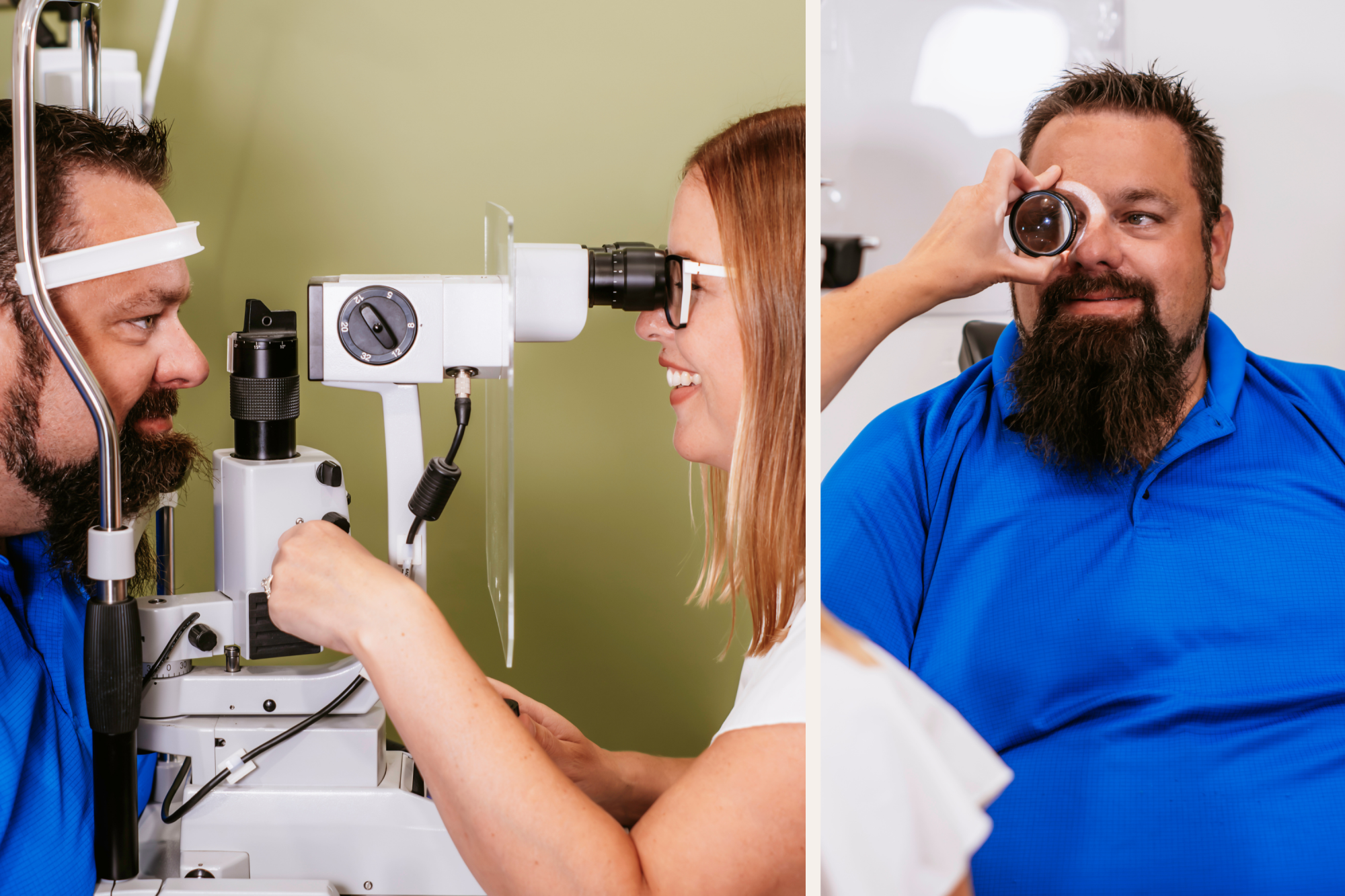
2. Frequent Headaches or Eye Strain
If you leave work with tension behind your eyes or headaches that creep in after screen time, your eyes may be working overtime.
This can stem from digital eye strain, a condition becoming more common as we spend hours in front of screens. But sometimes, it’s related to how your eyes work together. Even small misalignments can cause your visual system to overcompensate, leading to fatigue, blurred vision, or dizziness.
That’s where Aurora’s Vision Training program comes in. We design individualized training to strengthen eye coordination, focus, and reaction time. It’s especially beneficial for students, athletes, and professionals who rely on visual precision. These exercises don’t just improve performance; they reduce discomfort, headaches, and strain caused by visual imbalances.If you’re constantly fighting headaches, it might not be your posture or caffeine intake; it might be your eyes asking for help. Take our vision training quiz to learn more about your eyes—because knowledge is power!

3. It’s Been 2+ Years Since Your Last Exam
Think of your eyes like the rest of your body. Regular check-ups are key to staying healthy.
Even if your vision seems fine, a comprehensive eye exam helps detect changes you might not feel. Our eye doctors check for early signs of eye conditions such as glaucoma, macular degeneration, and diabetic retinopathy, which can develop silently and gradually.
Our eye exams include:
- A detailed discussion about your health and lifestyle
- Prescription testing for distance and near vision
- Retinal imaging and eye pressure testing
- An evaluation of eye coordination and overall ocular health
These visits aren’t just about updating glasses; they’re about prevention and peace of mind. We recommend that adults have a comprehensive exam every 2 years or annually after age 65.
If it’s been a while, your eyes will thank you for booking an appointment.
And you’re probably wondering, “When should I bring my child for their first eye exam?”
The Canadian Association of Optometrists recommends that children have their first eye exam between six and nine months of age, another at age 3, and then annually once they start school.
Even if your child seems to see well, early exams can uncover vision or coordination issues that affect reading, learning, and development. At Aurora, our team makes these visits fun and stress-free—helping kids feel comfortable while we make sure their eyes are healthy and ready to take on the world.

4. Family History of Eye Conditions
Your family history can say a lot about your eye health. If someone in your family has glaucoma, macular degeneration, diabetes, or cataracts, your risk of developing these conditions increases.
The good news? Early detection can make all the difference.
At Aurora, we use leading-edge imaging technology and specialized tests to track subtle changes in your eyes over time. Our eye doctors will tailor your care based on your health history, helping you stay ahead of potential problems before they affect your vision.
Because when it comes to your eyes, prevention isn’t just better than cure—it’s everything.

5. Dry, Irritated, or Watery Eyes
If your eyes constantly feel gritty, burn after long days, or water excessively, you might have dry eye disease, one of the most common reasons people visit our clinic. While it might sound simple, dry eye can affect your comfort, focus, and even the quality of your vision.
At Aurora’s Dry Eye Clinic, we don’t take a one-size-fits-all approach. We perform comprehensive diagnostic testing to pinpoint the cause, whether it’s oil gland dysfunction, inflammation, or screen-time habits. Then we create a personalized treatment plan that may include:
- In-office therapies like IPL and radiofrequency treatments to restore oil gland function
- At-home care recommendations for hydration, nutrition, and eye hygiene
- Ongoing follow-up care to ensure lasting relief
Healthy, hydrated eyes mean more than just comfort; they protect your vision for the long term.

What to Expect During a Comprehensive Eye Exam at Aurora
From the moment you walk into our Grande Prairie clinic, we want you to feel cared for. Your comprehensive eye exam is designed to be informative, unhurried, and personalized.
Here’s what typically happens:
- Conversation First: We’ll discuss your health, vision history, and lifestyle.
- Precise Testing: Expect advanced retinal imaging, eye pressure checks, and detailed prescription assessments.
- Visual Function Review: We’ll test how your eyes work together, and if needed, refer you to our vision training program.
- Next Steps: Whether you need dry eye therapy, glasses, contact lenses, or further testing, we’ll guide you with clarity and compassion.
Our approach is comprehensive, but our goal is simple: to make sure you see and feel your best.
How Often Should You Have an Eye Exam?

If you have existing vision conditions, wear contacts, or notice any changes in your vision, we may recommend more frequent check-ups.
Book Your Next Eye Exam at Aurora Eye Care
Your eyes deserve a level of care that looks beyond the surface.
At Aurora Eye Care, our friendly, knowledgeable team treats every patient like family, taking the time to understand your unique needs and find solutions that help you live and see comfortably. From comprehensive eye exams and dry eye management to vision training and sports vision therapy, we’re here to help you protect your sight for years to come.
Your vision, our passion—and your cue to stop putting off that eye exam!
Schedule your eye exam today and experience the Aurora difference: care that’s personal, precise, and passionately focused on you.

Frequently Asked Questions
What are the signs it might be time to see an eye doctor?
A few common signs include blurry vision or difficulty focusing, frequent headaches or eye strain, dry or irritated eyes, a family history of eye conditions, and simply not having had an exam in the last two years. Even if your vision feels fine, these clues can point to changes worth having checked.
How often should adults get an eye exam?
We generally recommend adults have a comprehensive eye exam every two years, or annually after age 65. If you have an existing vision condition, wear contacts, or notice any changes in your vision, we may recommend more frequent visits.
When should my child have their first eye exam?
The Canadian Association of Optometrists recommends a child’s first eye exam between six and nine months of age, another around age 3, and then annually once they start school. Early exams can catch vision or coordination issues that might affect reading, learning, and development, even if your child seems to see well.
Can headaches or eye strain really be related to my eyes?
Yes, frequent headaches or eye strain, especially after screen time, can be a sign of digital eye strain or how well your eyes work together. Even small misalignments can cause your visual system to overcompensate, leading to fatigue, blurred vision, or dizziness, and Aurora’s Vision Training program is designed to help strengthen eye coordination and reduce this kind of discomfort.
What happens during a comprehensive eye exam at Aurora Eye Care?
Your exam starts with a conversation about your health, vision history, and lifestyle, followed by precise testing like retinal imaging, eye pressure checks, and a detailed prescription assessment. We’ll also review how your eyes work together and, if needed, discuss next steps like dry eye therapy, glasses, contact lenses, or vision training.
Does family history affect my risk of eye conditions?
Yes, if a family member has glaucoma, macular degeneration, diabetes, or cataracts, your risk of developing these conditions can be higher. We use advanced imaging and specialized testing to track subtle changes over time and tailor your care to your personal health history.
What could be causing my dry, irritated, or watery eyes?
Dry, gritty, burning, or watery eyes are often signs of dry eye disease, one of the most common reasons patients visit our clinic. At Aurora’s Dry Eye Clinic, we run diagnostic testing to pinpoint the cause, whether it’s oil gland dysfunction, inflammation, or screen-time habits, and build a personalized treatment plan from there.