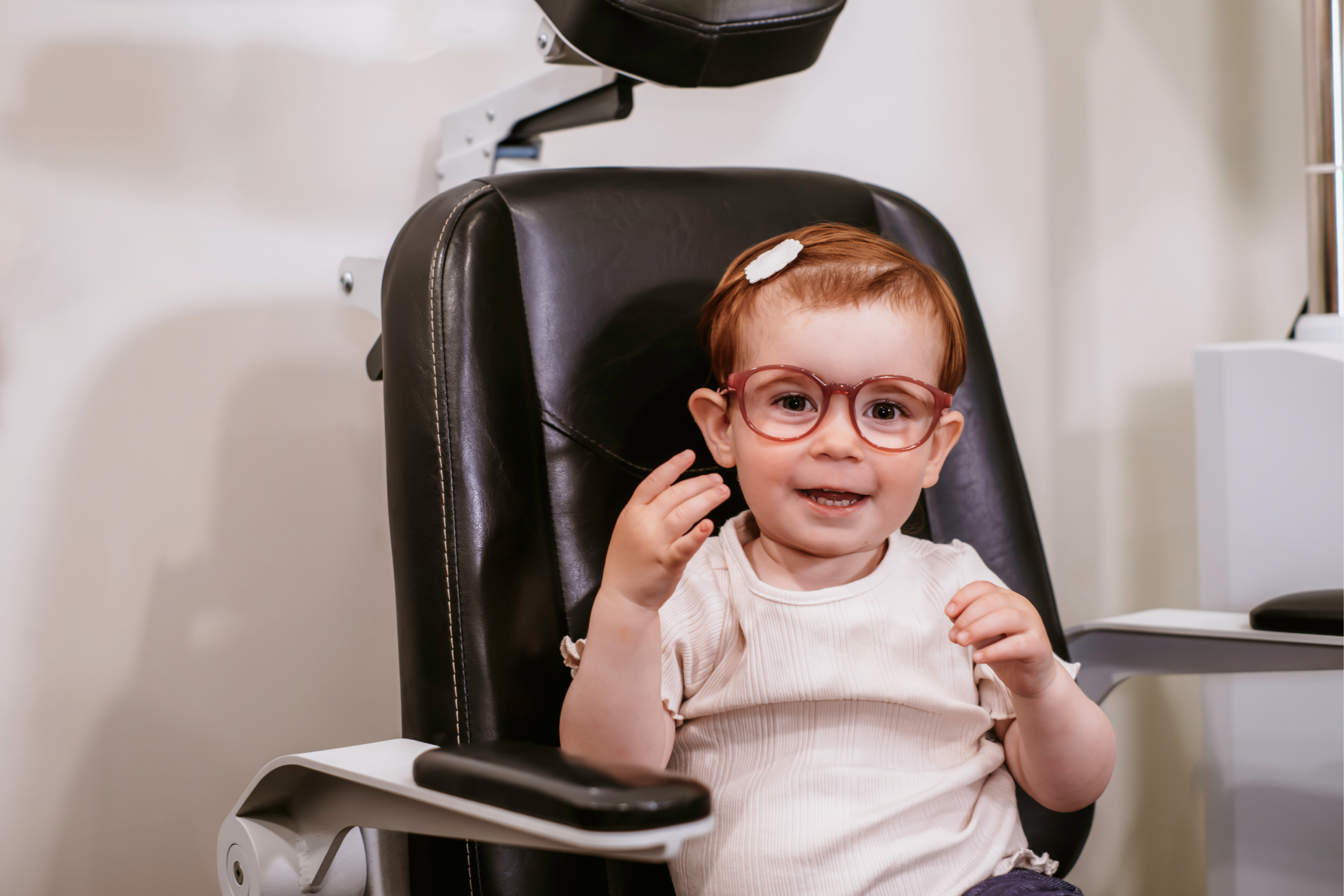
Ever wondered whether your little one’s vision is keeping up with their growth? Healthy vision plays a significant role in learning and play.
At Aurora Eye Care, we believe that healthy eyes make for confident kids; whether they’re colouring inside the lines, reading aloud in class, or racing across the playground with their friends. That’s why we’ve put together this guide to walk you through what a child’s eye exam looks like, how we keep it fun and stress-free (for them and for you!), and why it matters for their learning and development.
If you’re in Grande Prairie or the surrounding area and thinking about booking a kids’ eye doctor visit, you’re in the right place.

When Should Children Have Their First Eye Exam?
Early checks are the best checks. The Canadian guidelines (which we, of course, follow) recommend a child’s first eye exam around six months of age, another at age three, and an annual exam once they start school.
Why six months? Because the eyes are developing fast during those early months, even subtle issues like alignment or tracking are easier to catch and treat when kids are young. At Aurora, we’re happy to see infants, toddlers and older children, because it’s never too early (or too late) to give their eyes the attention they deserve.
How We Make Eye Exams Fun and Stress-Free for Kids
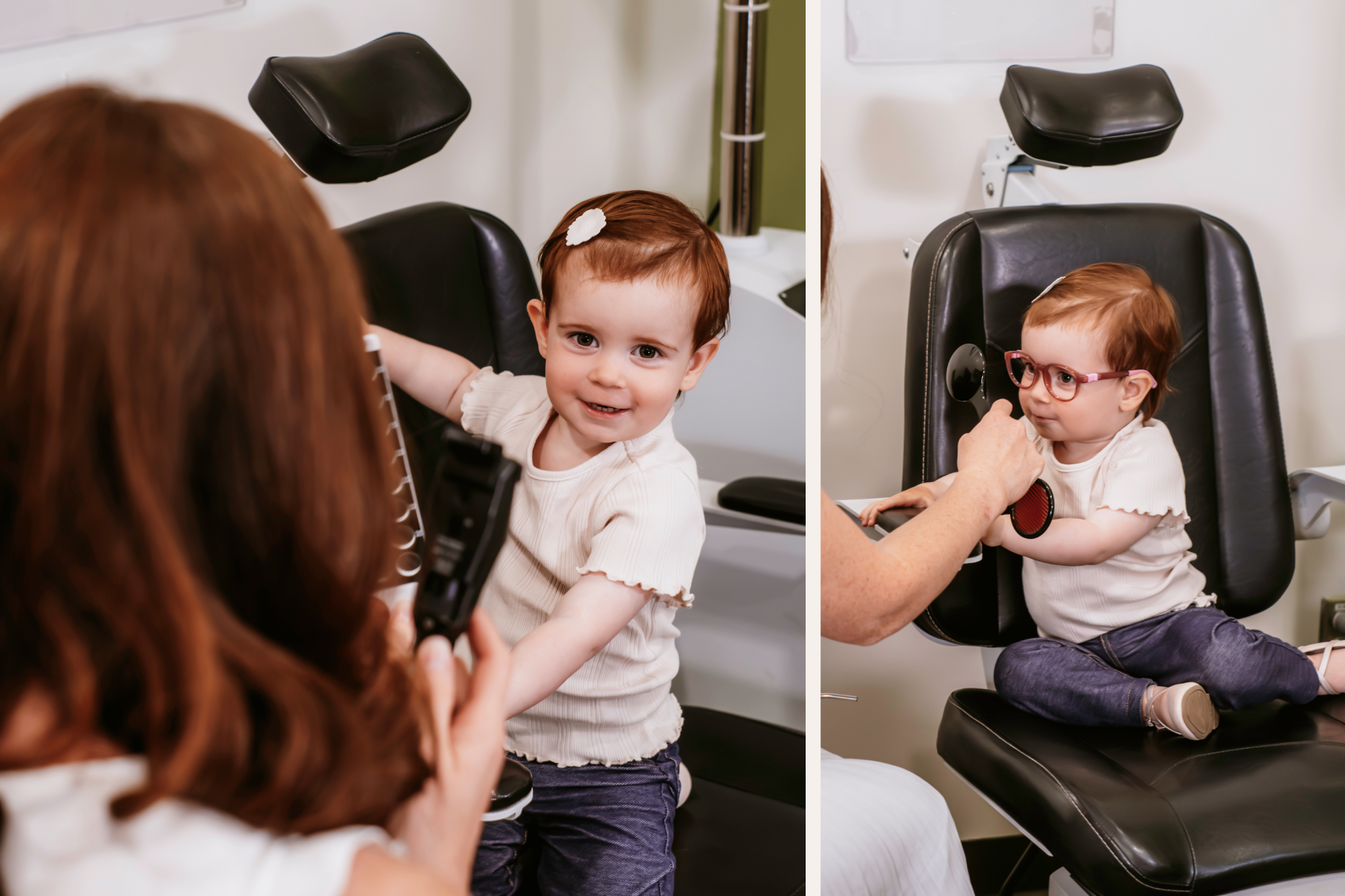
We get it, an eye exam sounds clinical. But we do everything we can to turn it into an experience your child can relax through.
Here’s how:
- Our waiting area is friendly, with staff greeting your child by name and using simple, cheerful language.
- The exam room features gentle lights, reassuring voices, and plenty of “what does that look like?” moments to keep your child engaged rather than anxious.
- Parents stay close: you can be right there beside your child if that makes them feel more comfortable.
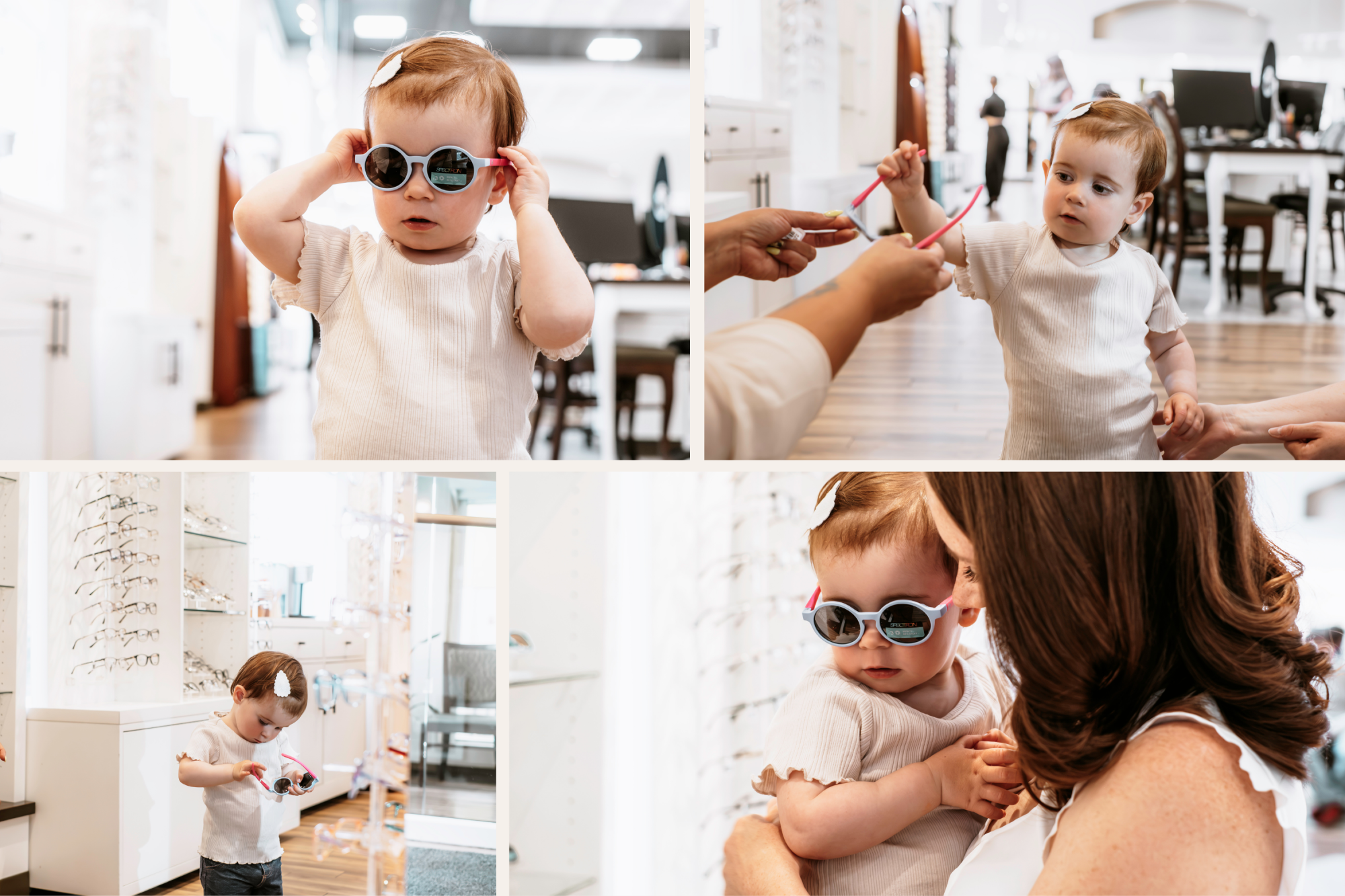
- After the exam? Time to try on colourful frames or pick out lenses, and yes, stickers or little rewards are standard here. Honestly, these work on most adults, too!
- Our goal: your child walks out smiling, not stressed, and you walk out with clarity on what we found and what it means.
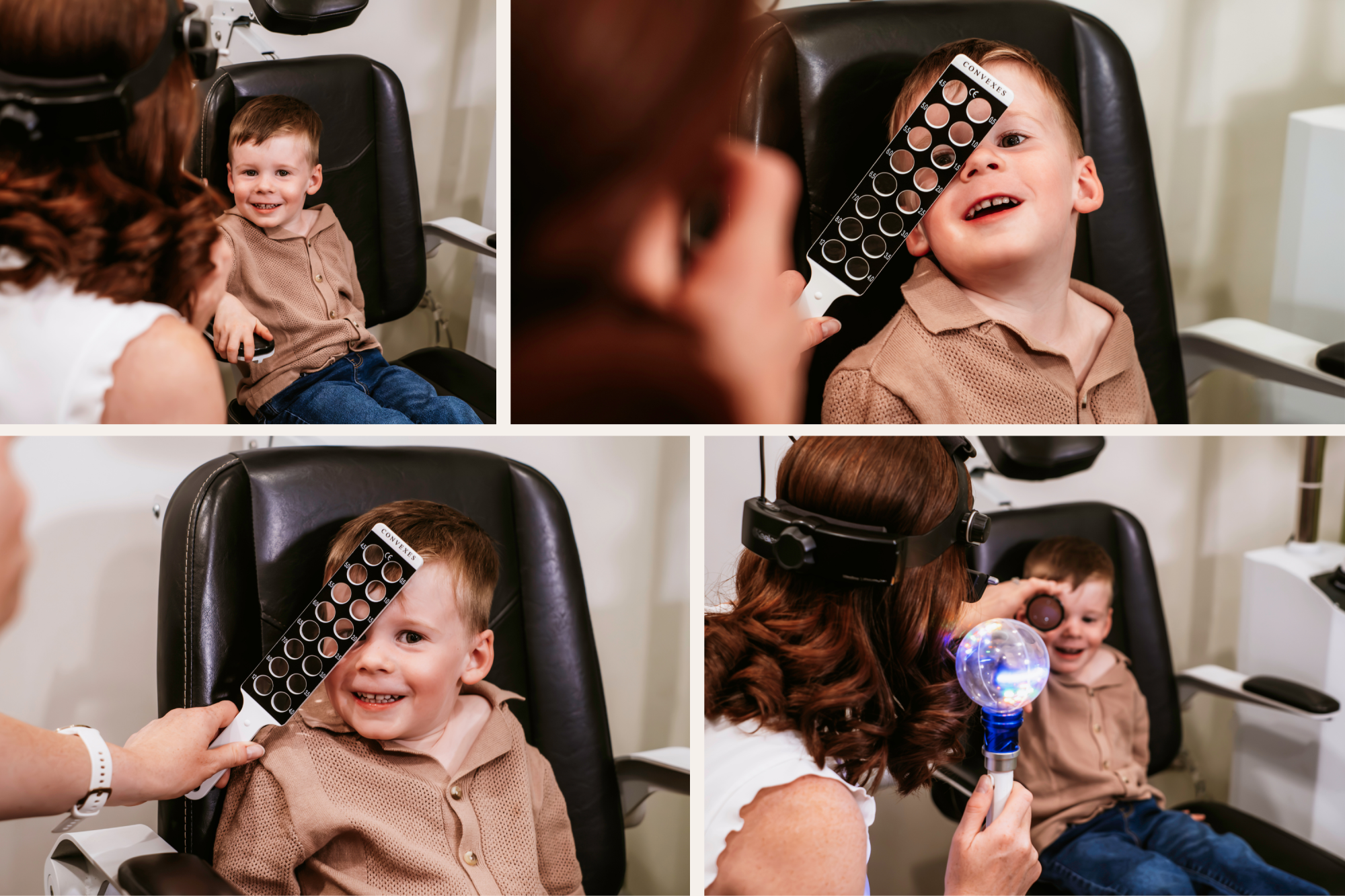
What We Test for in Pediatric Eye Exams
Here’s the breakdown of what happens when your child visits Aurora:
Visual Acuity
How clearly can they see? This might look like matching shapes, pictures, letters, or just identifying big vs. small objects, depending on age.
Eye Coordination and Tracking
Do both eyes work together smoothly when your child follows a moving toy or looks from one side to another?
Depth Perception and Focusing Ability
Can their eyes quickly shift from near to far? Can they maintain focus on a book or screen comfortably?
Eye Health and Alignment
Are there signs of lazy eye (amblyopia) or eye turn (strabismus)? Are the eyes physically healthy (no hidden damage or strain)?
Personalized Assessment
Because each child is unique, our optometrists tailor the checks to your child’s age, development, and needs. We’re not just checking boxes; we’re checking their eyes and overall health.
Common Childhood Vision Problems
Even healthy kids sometimes face vision challenges, and the earlier we spot them, the smoother the solution.
Some common ones we see:
- Myopia (nearsightedness): Trouble seeing far away on the playground, the whiteboard, or car rides.
- Hyperopia (farsightedness): Difficulty seeing up close; reading, colouring or focusing on screen time.
- Astigmatism: Blurred or distorted vision, both near and far, if untreated.
- Amblyopia (lazy eye): One eye is weaker than the other, often without obvious outward signs.
- Strabismus (eye turn/“crossed” or “wandering” eye): Eyes not aligned or tracking together correctly.
When a kid’s eye doctor catches these early, we have more treatment options and better outcomes. You don’t have to worry about it being “too late”, so we’d rather see it sooner.
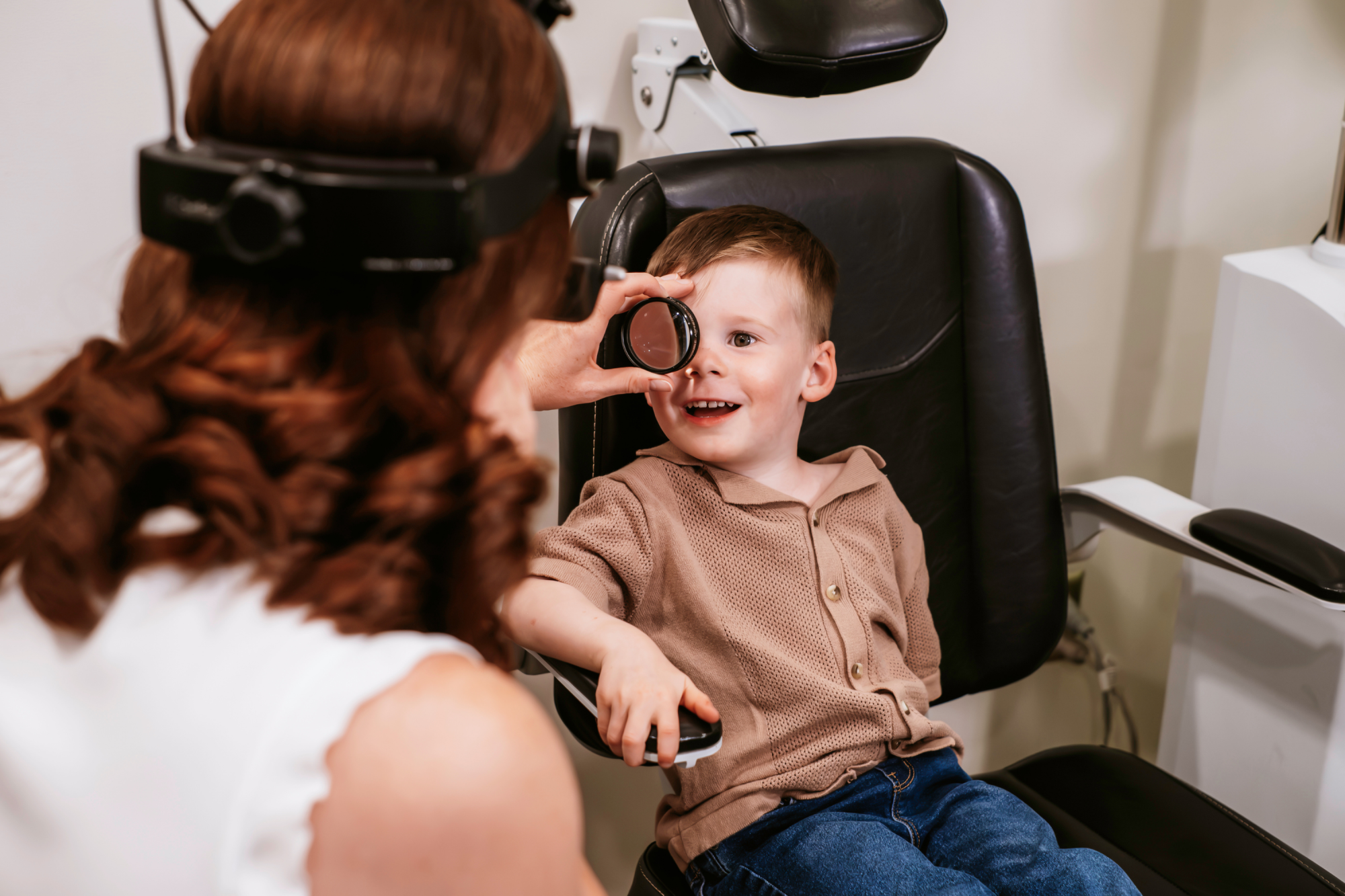
How Vision Affects Learning and Development
Here’s a fact: up to 80% of learning is visual.
If your child’s vision isn’t sharp or their eyes aren’t working well together, it can show up as:
- Inattention or day-dreaming (when really the board is blurry)
- Headaches, squinting, covering one eye
- Avoiding reading or near-tasks
- Trouble with sports or coordination (vision helps there, too)
At Aurora Eye Care, our eye doctors don’t just check vision; we consider how it links with your child’s learning and development. A child who sees clearly and comfortably can focus, explore, and thrive.
Alberta Health Coverage for Children’s Eye Exams
Good news for Alberta families! Children under 19 do have annual eye exams covered by Alberta Health Services. At Aurora, we make billing and administrative tasks easy, and we’re happy to walk you through what’s covered and what is optional (for example, advanced imaging for children five and older).
All you have to do is either pick up your phone or go online to book the appointment. And let us handle the rest.

Why Parents Trust Us with Their Children’s Eye Care
Families who visit us often share similar themes about their experience at Aurora Eye Care. They talk about how supported their children feel, how comfortable the appointment is from start to finish, and how our team makes the whole process easier for parents, too.
Over the years, we’ve noticed a few things parents mention again and again. They appreciate how our opticians connect with kids, how our doctors take the time to explain what’s happening in a way little ones can understand, and how our team helps make moments like frame-picking feel fun instead of overwhelming.
We see it every day in the clinic. Kids light up when they find frames that make them feel confident. Parents breathe a little easier when they realize the visit isn’t stressful at all.
These experiences are exactly what we aim for — a welcoming space. Genuine care. A team that treats your family like our own. It’s why so many families keep coming back and why we love doing what we do.
Tips for Preparing Your Child for Their Appointment
Want the visit to go smoothly? A little preparation goes a long way toward helping your child feel calm, curious, and even excited about their eye exam.
Here are some parent-tested, tried-and-true tips to make it an easy, positive experience from start to finish:
1. Talk it up Ahead of Time
Kids take their cues from you, so how you frame the appointment can completely shape their attitude. Try saying something upbeat and straightforward like, “We’re going to visit the eye doctor to check how strong your eyes are, so you can see even better when you’re playing outside or reading your favourite book.”
Explain what will happen in a way they can relate to, like lights, pictures, games, and looking at letters or shapes. Avoid saying “it won’t hurt,” since that can actually spark worry. Instead, focus on the fun parts: “You’ll get to look through cool machines that show us how your eyes work!”
2. Bring a Comfort Item
Even the bravest kids can feel shy in a new place, so it helps to have something familiar nearby. Whether it’s a well-loved stuffed animal, a favourite storybook, or even a small fidget toy, that little piece of home provides instant reassurance.
We’ve seen plenty of teddy bears and dinosaurs come along for exams, and our team does their best to greet them, too. It’s a small thing that helps your child feel safe and supported during the appointment.
3. Schedule Wisely
Timing makes all the difference. Book your visit for a time when your child is most alert and well-rested, usually in the morning or right after a snack. Hungry or overtired kids tend to have shorter attention spans (and understandably less patience for bright lights or questions).
We’re parents too, so we get it. When you call to book, just let our team know what time of day works best for your child, and we’ll do our best to accommodate it.
4. Keep it Light and Positive
A little enthusiasm can make a better experience. Treat the appointment like an outing, not an obligation. Make it an adventure; grab a hot chocolate or juice box after, visit a nearby park, or let them help choose their new frames if they need glasses.
During the exam, cheer them on with small wins like, “You’re doing such a great job looking at that picture!” or “That was fast, your eyes are super strong!” These moments turn what could be intimidating into something that boosts their confidence.
5. Follow Through After the Appointment
Once it’s over, take a few minutes to talk about what they saw, what they liked best, and what comes next. Did they love the funny lenses? Were they proud to read all the letters? Sharing those moments helps build positive memories and reduces any nervousness for next time.
If they got new glasses, make a big deal out of it! It is a big deal, after all. Reinforcing that this is something special, something that helps them do the things they love, sets a foundation for lifelong eye care confidence.

Ready to help your child see confidently and clearly? Early care sets the stage for better learning, healthier eyes, and a happier kid.
Book your child’s eye exam with our warm, experienced, family-friendly team at Aurora Eye Care today.