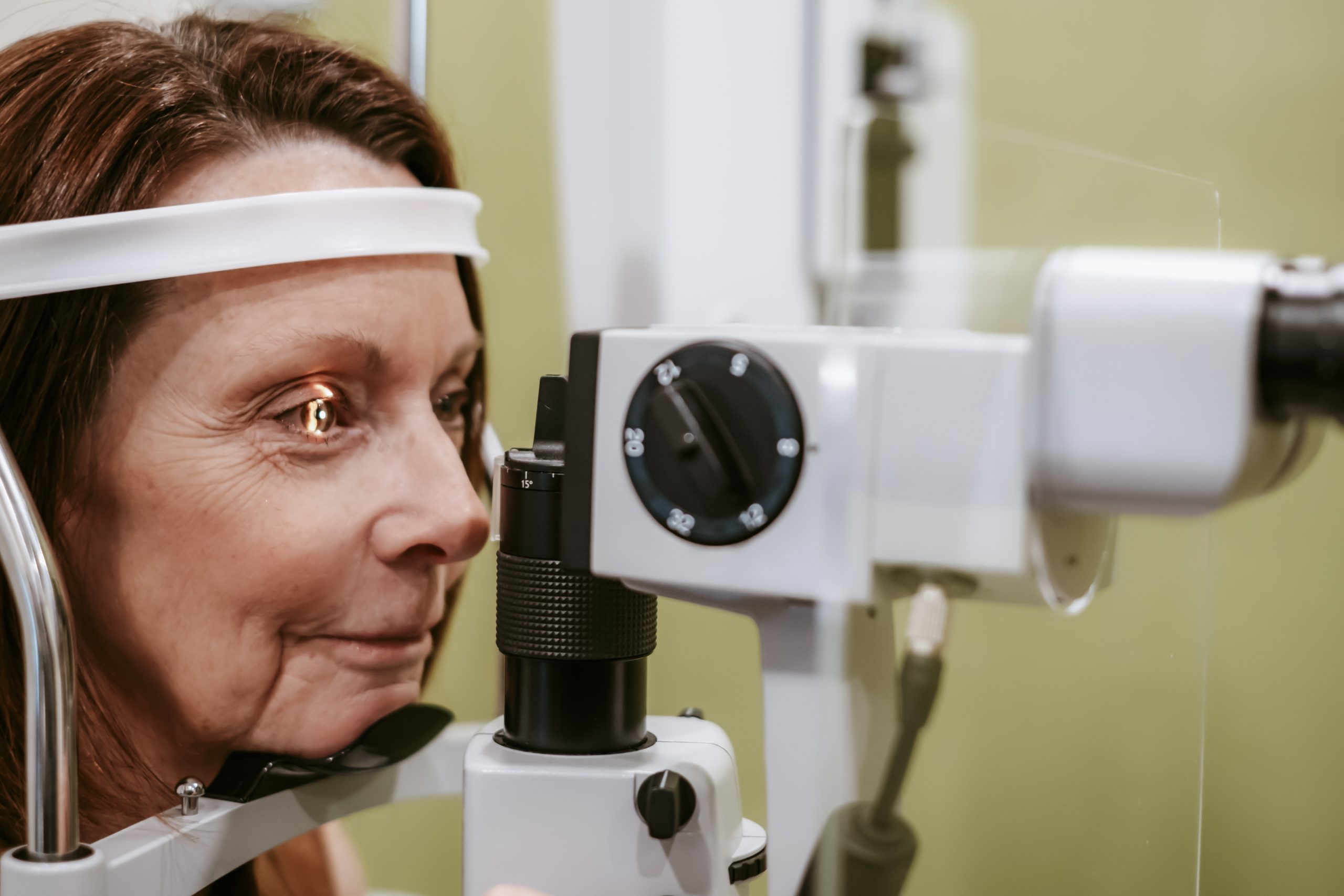
If you’ve recently been told you have astigmatism, your first question is probably simple: Can astigmatism be corrected?
The answer is yes, astigmatism can be corrected extremely well with the right treatment. The important distinction is that corrected doesn’t necessarily mean cured. For most people, the right prescription allows them to see clearly every day without their astigmatism interfering with work, driving, reading, or everyday life.
At Aurora Eye Care in Grande Prairie, we help patients understand not only what their prescription says, but why it matters. Whether you’re considering glasses, contact lenses, or wondering if surgery is an option, the first step is understanding your eyes and the correction options available to you.
What Is Astigmatism and Why Does It Blur Your Vision?
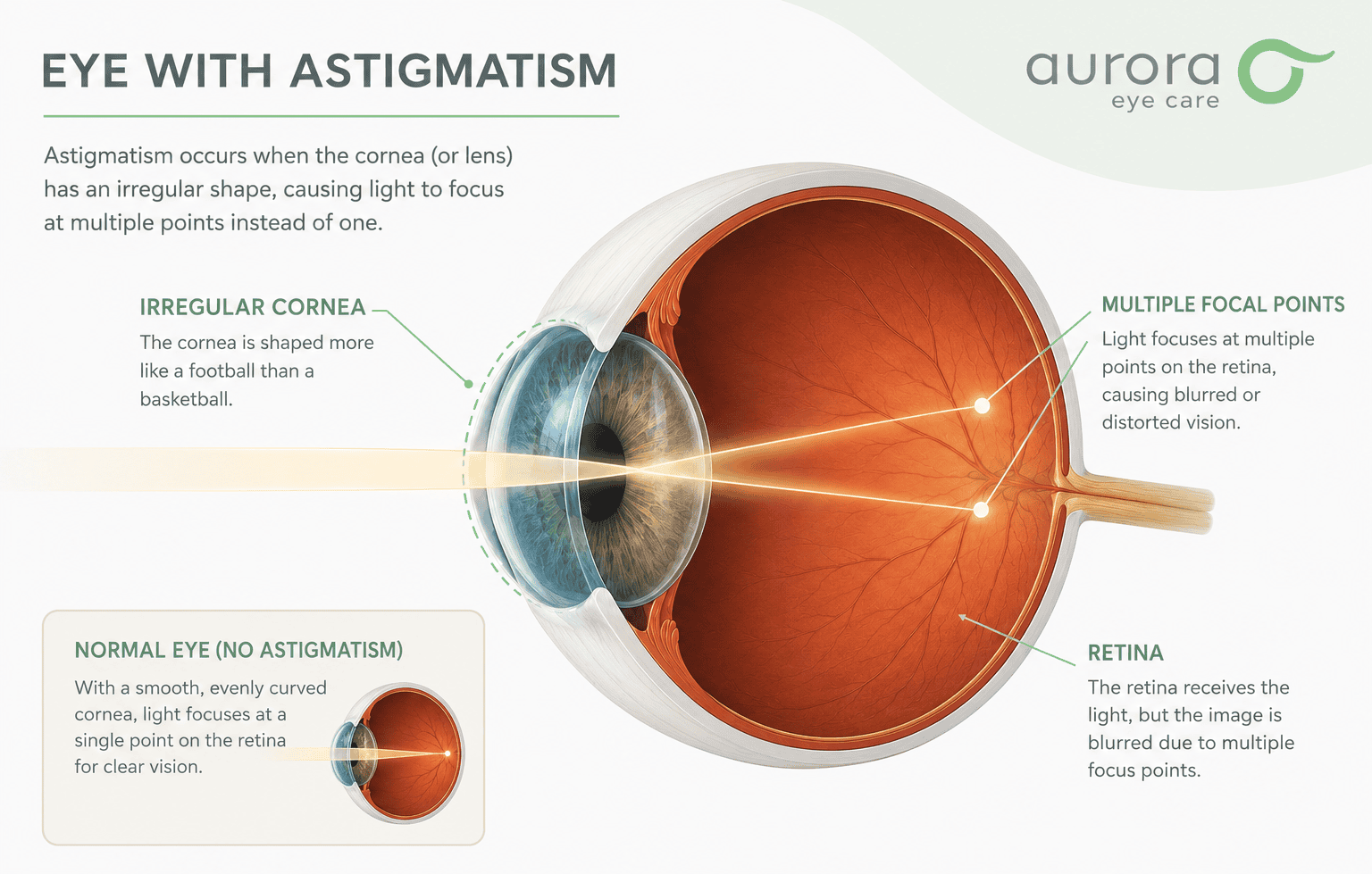
Astigmatism is one of the most common refractive errors, which means it’s a condition that changes how light focuses inside your eye.
Ideally, the front surface of your eye (the cornea) is evenly curved, much like a basketball. With astigmatism, the cornea, or sometimes the natural lens inside the eye, has a shape that’s more like a football, with one curve steeper than the other. This is called an irregular corneal curvature.
Because of that uneven shape, light doesn’t focus on a single point on the retina. Instead, it focuses in multiple places, creating blurry or distorted vision.
Common astigmatism symptoms include:
- Blurry vision at both near and far distances
- Eyestrain
- Frequent headaches
- Squinting to see clearly
- Difficulty driving at night
Astigmatism is often present from birth, tends to run in families, and can gradually change over time. That’s one reason regular comprehensive eye exams are important, even if you’ve been wearing glasses for years.
Corrected vs. Cured: What’s the Difference?
This is where many people get confused.
Corrected means the effects of astigmatism have been compensated for. Glasses, toric contact lenses, or refractive surgery allow light to focus properly again, giving you clear vision.
Cured would mean permanently changing the shape of your eye so the astigmatism no longer exists.
Glasses and contact lenses do not change the shape of your cornea. They simply correct how light enters your eye.
Laser vision correction procedures such as LASIK reshape the cornea, which comes closest to permanently correcting astigmatism. However, surgery isn’t appropriate for everyone, and the decision depends on several factors that require a surgical assessment.
For most people, modern correction options provide excellent vision without needing surgery.
Your Options for Correcting Astigmatism
Glasses
For many people, glasses are the easiest and most effective way to correct astigmatism.
Your prescription includes two measurements that specifically relate to astigmatism:
- CYL (Cylinder): measures how much astigmatism you have.
- Axis: identifies the exact orientation of your astigmatism so the correction lines up perfectly with your eye.
These measurements allow lenses to compensate for the uneven curvature of your eye, giving light a clear path to your retina.
An accurate prescription matters. Glasses that under-correct or over-correct astigmatism often lead to headaches, eye fatigue, and blurry vision, even if you’re wearing them consistently.
Will glasses fix astigmatism immediately?
For many people, yes!
Once you’re wearing an accurate prescription, vision often becomes noticeably clearer right away. If your prescription has changed significantly, especially your astigmatism correction, your brain may need a few days to adjust. During that adjustment period, things may feel slightly different, but most patients adapt quickly.
Toric Contact Lenses
Many people still believe they can’t wear contact lenses because they have astigmatism. Fortunately, that’s no longer true.
Toric contact lenses are specially designed for people with astigmatism. Like glasses, they correct the uneven curvature of the eye, but they’re built to remain in the correct position while you blink and move throughout the day.
Both soft toric lenses and rigid gas-permeable lenses are available, depending on your prescription, eye shape, and lifestyle.
Finding the right fit involves more than simply matching your glasses prescription. A contact lens fitting is a separate appointment where your optometrist evaluates your eye health, measures how lenses sit on your eye, and provides trial lenses to ensure comfort and clear vision before finalizing your prescription.
If you’ve always assumed contacts weren’t an option because of your astigmatism, today’s technology may surprise you.
Refractive Surgery
Procedures such as LASIK and PRK reshape the cornea to reduce or correct astigmatism.
While many people are good candidates, surgery isn’t right for everyone. Your age, prescription, corneal thickness, eye health, and several other factors all influence whether surgery is appropriate.
Aurora Eye Care does not perform laser vision correction, but during a comprehensive eye exam, we evaluate your eye health and discuss whether a referral to an ophthalmologist for a surgical consultation makes sense for your situation.
For many patients, glasses or toric contact lenses continue to provide excellent long-term vision without surgery.
What Does Aurora Check During an Assessment?
No two prescriptions are exactly alike.
Some people have only mild astigmatism with very few symptoms. Others have more significant astigmatism that noticeably affects their daily activities.
One measurement your optometrist looks at is the CYL (Cylinder) value on your prescription.
Generally speaking:
- -0.25 to -0.75 is considered mild.
- -1.00 to -2.00 is considered moderate.
- Above -2.00 is generally considered more significant.
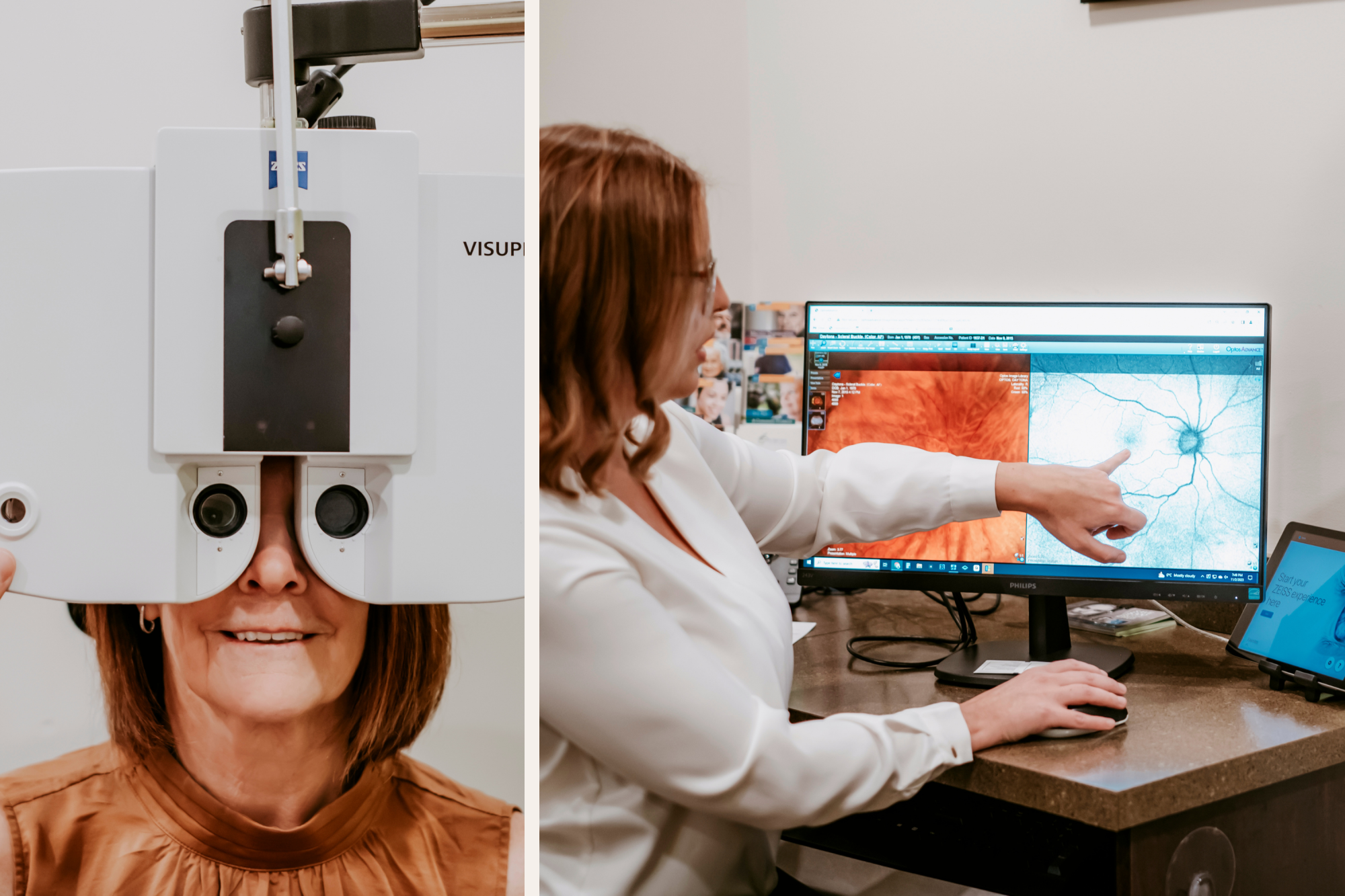
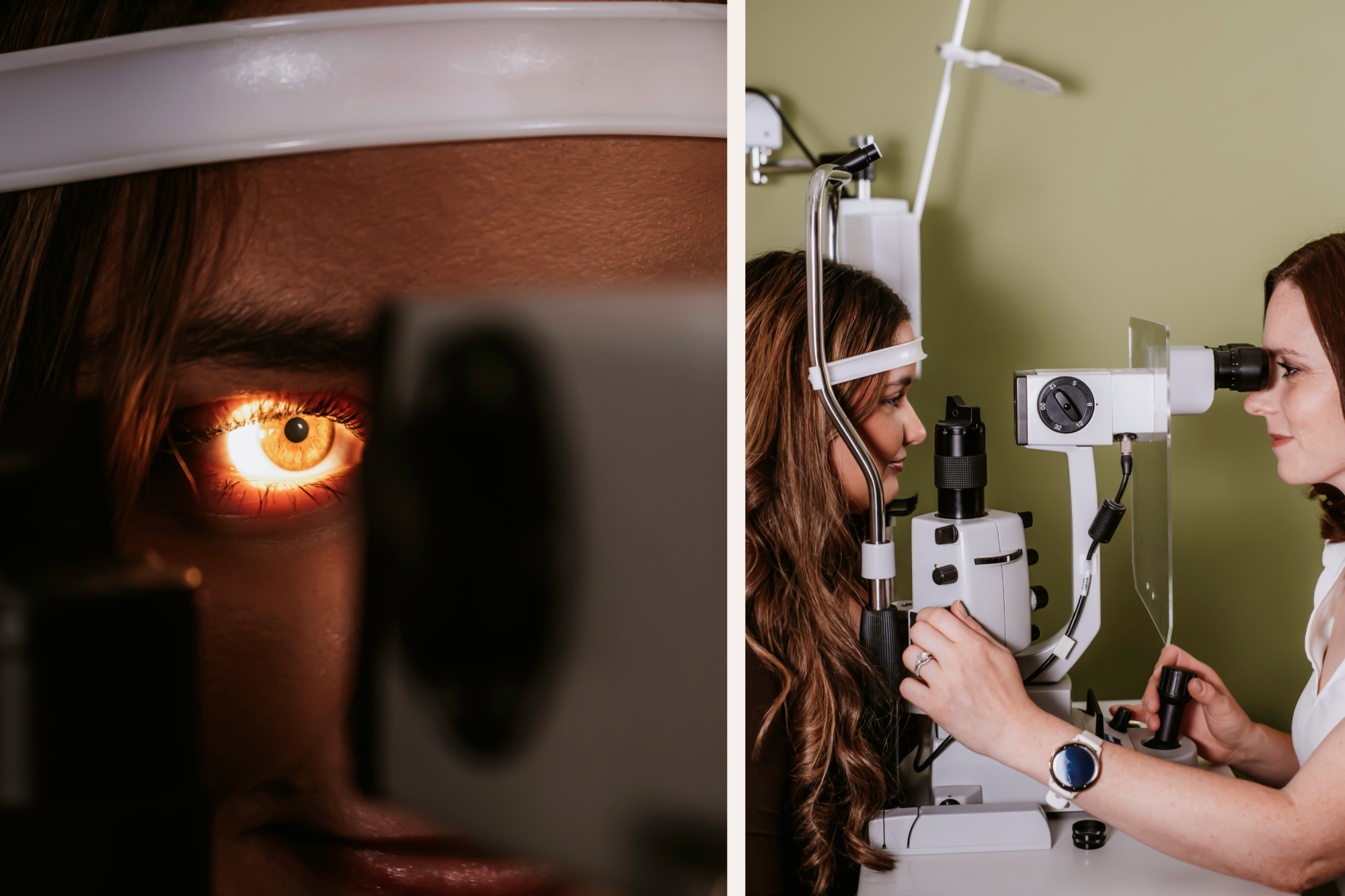
At Aurora Eye Care, we use advanced technology, including the i.Profiler Plus, to create a detailed map of your eye’s optical system. This provides high-resolution wavefront measurement and corneal topography.
Your comprehensive eye exam also evaluates the overall health and shape of your cornea, screens for other eye conditions, and helps determine which correction option is likely to provide the best vision.
One thing many patients tell us is that they appreciate having their results explained clearly. Rather than leaving with a prescription full of unfamiliar numbers, you’ll understand what your prescription means and how it relates to your everyday vision.
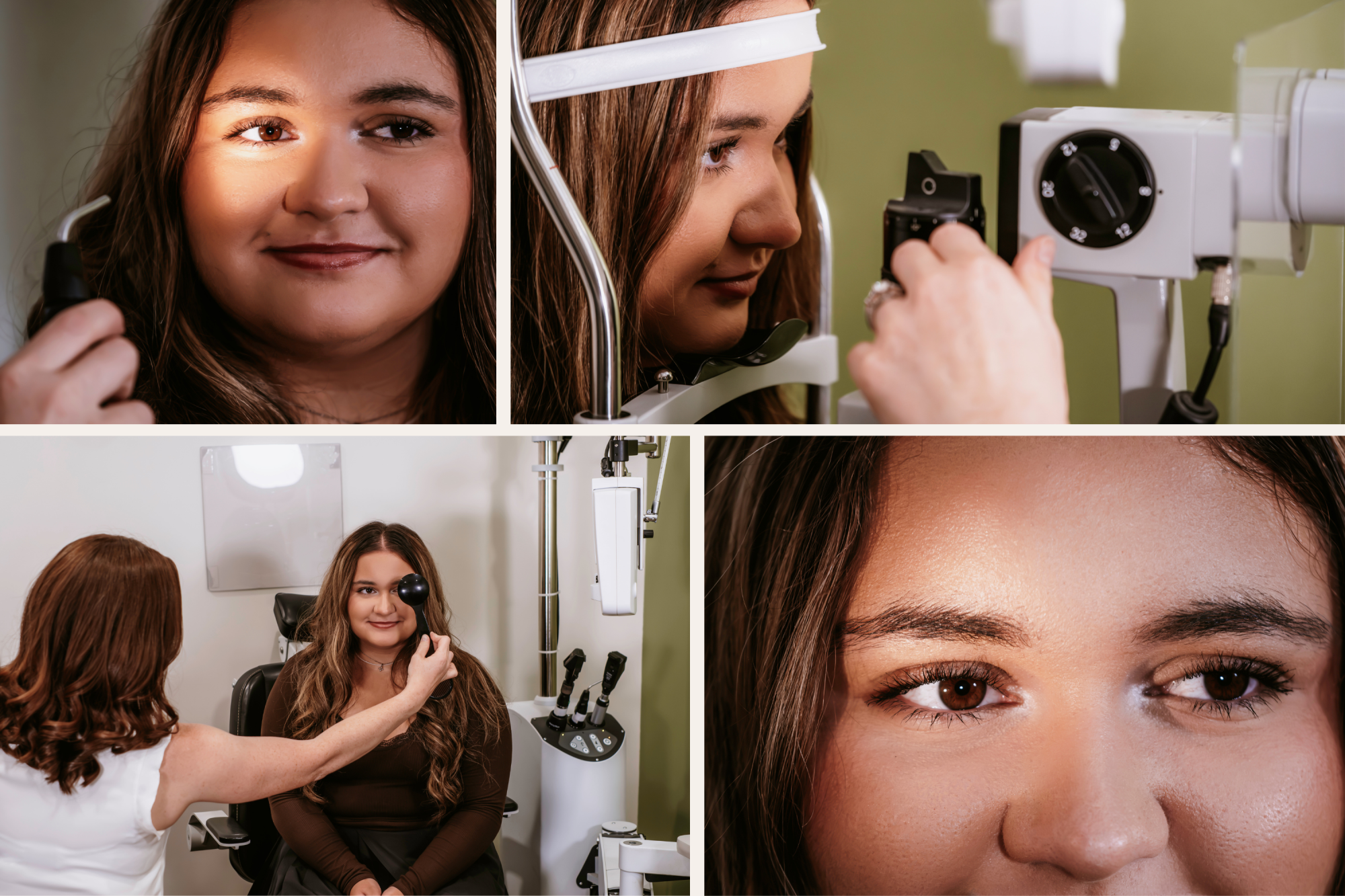
Book an Assessment at Aurora Eye Care in Grande Prairie
If you’ve been experiencing blurry vision, headaches, eyestrain, or you’ve recently been told you have astigmatism, the next step is a comprehensive eye exam.
Our team will carefully measure your prescription, explain your results in plain language, and help you explore the correction option that best fits your lifestyle, whether that’s glasses, toric contact lenses, or a referral for a surgical consultation.
Book a comprehensive eye exam at Aurora Eye Care and take the first step toward clearer, more comfortable vision.

Frequently Asked Questions
Can astigmatism be corrected completely?
Yes. Astigmatism can be corrected very effectively with glasses, toric contact lenses, or refractive surgery. While glasses and contacts don’t change the shape of your eye, they compensate for it so most people enjoy clear, comfortable vision.
Can you wear contact lenses if you have astigmatism?
Yes. Toric contact lenses are specifically designed to correct astigmatism. During a contact lens fitting, your optometrist determines which lens design best suits your eyes and lifestyle.
What is the difference between corrected and cured astigmatism?
Corrected means your vision is clear because lenses compensate for the irregular shape of your cornea. Cured would mean permanently changing the cornea itself, which is only possible through certain refractive surgery procedures for eligible patients.
Does astigmatism get worse over time?
It can. Astigmatism often changes gradually throughout life, which is why regular comprehensive eye exams are important. Updating your prescription helps maintain comfortable, clear vision.
How do I know how bad my astigmatism is?
The severity is measured using the CYL (Cylinder) value on your prescription. Mild astigmatism typically ranges from -0.25 to -0.75, moderate from -1.00 to -2.00, and values above -2.00 are generally considered more significant. Your optometrist will explain exactly what your prescription means and which correction option is best for you.