It’s happening again. A subtle flutter in your eyelid that you didn’t ask for, can’t control, and now can’t stop thinking about.
If you’ve been Googling “why does my eye keep twitching” or looking up common eye twitching causes, here’s the reassuring part: most eyelid twitching is harmless. The clinical term for a common, benign eye twitch is myokymia, which means a small involuntary muscle spasm in the eyelid.
That said, twitching can still feel annoying, distracting, and a little concerning when it keeps coming back. At Aurora Eye Care in Grande Prairie, we often remind patients that eye symptoms are worth listening to, especially when they last longer than expected.
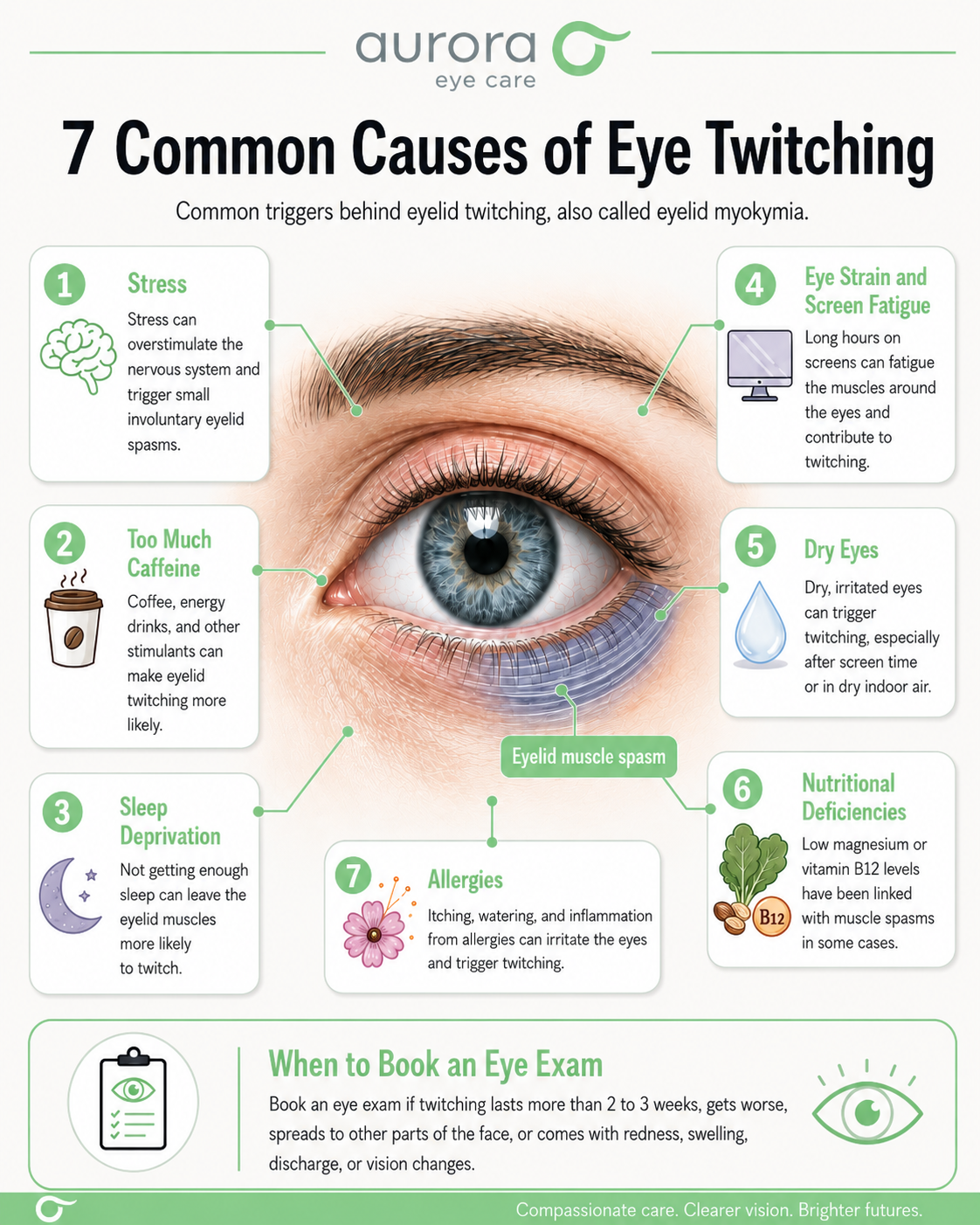
The 7 Most Common Eye Twitching Causes
1. Stress
Stress is one of the most common reasons your eyelid starts doing its own thing. When your nervous system feels overwhelmed, small muscles can respond with involuntary spasms, including the muscles around your eyelid.
Eye twitching stress triggers often show up during busy seasons, long work weeks, poor sleep stretches, or times when your body has been running on fumes for too long.
2. Too Much Caffeine
Yes, your coffee might be to blame. Caffeine stimulates the nervous system, and higher amounts can trigger eyelid spasms for some people. If you’ve added an extra coffee, energy drink, or afternoon tea to survive the day, try cutting back for a few days and see whether the twitching settles.
Does caffeine cause eye twitching for everyone? No. But eye twitching caffeine sensitivity is common enough that it’s worth checking out.
3. Sleep Deprivation
A tired nervous system is often a twitchy one. Eye twitching sleep deprivation tends to happen when your body hasn’t had enough time to rest, recover, and regulate. This often pairs with stress, which is why the classic combo looks like this: not enough sleep, too much caffeine, too much screen time, and one eyelid that will not stop fluttering.
A few better nights of sleep can make a difference.
4. Eye Strain and Screen Fatigue
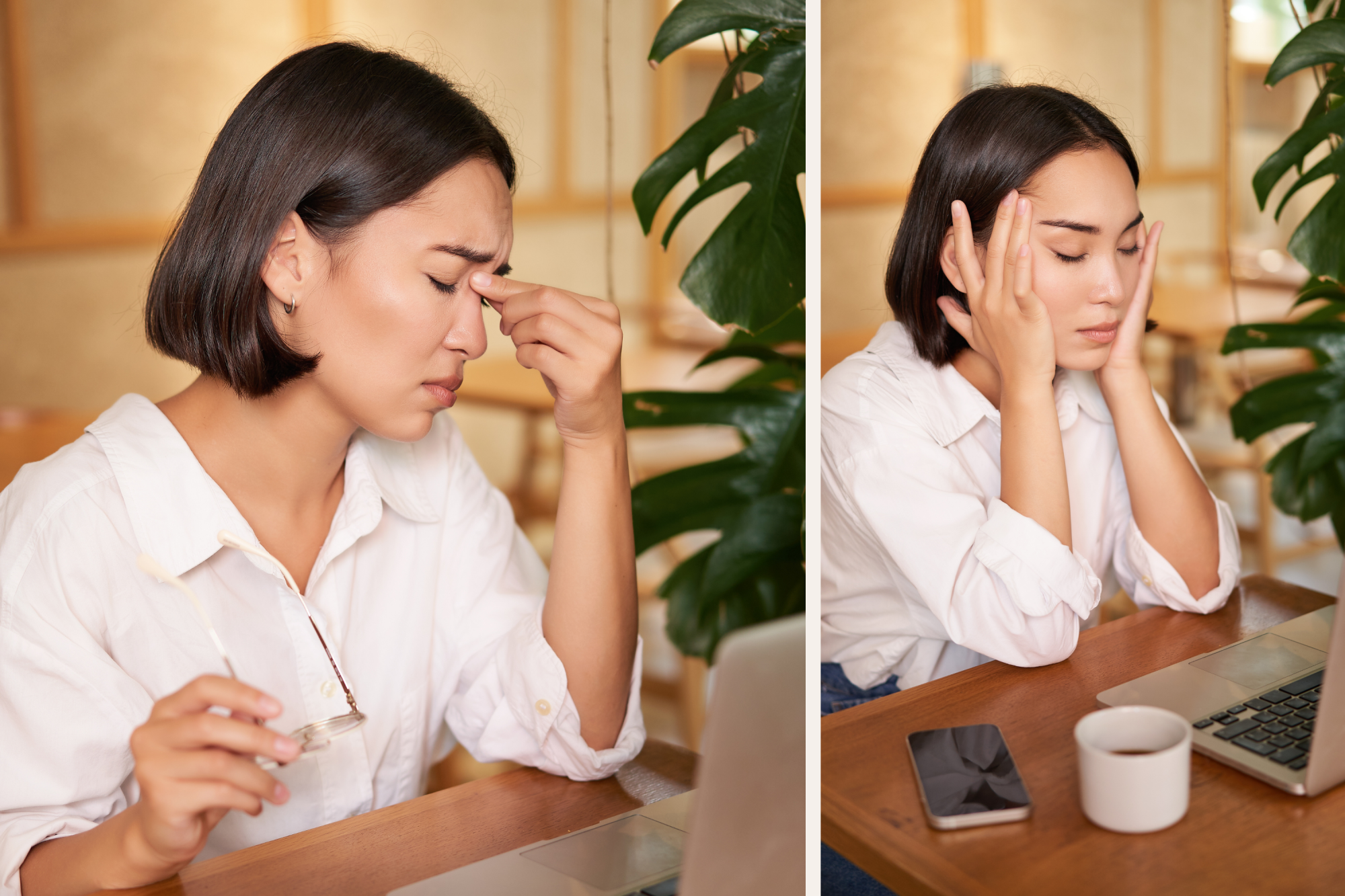
Long hours on screens can fatigue the muscles around your eyes, especially when you’re focusing up close for most of the day.
Try the 20-20-20 rule: every 20 minutes, look about 20 feet away for 20 seconds. It sounds simple because it is, and your eyes will usually appreciate the reset.
If your eyes feel tired often, or you’re squinting, getting headaches, or leaning closer to your screen, an updated prescription might help. Booking an eye exam in Grande Prairie is a good next step if screen strain keeps coming back.
5. Dry Eyes
Dry eyes and eye twitching are connected more often than people realize. When the surface of the eye gets irritated, your eyelid can respond with twitching or spasms. If the twitching comes with gritty, burning, watery, or tired-feeling eyes, dry eye could be part of the problem.
This is especially worth paying attention to if symptoms feel worse after screen time, in windy weather, during allergy season, or in dry indoor air. Aurora’s dry eye clinic can help identify what type of dryness you’re dealing with and what treatment makes sense for your eyes.
6. Nutritional Deficiencies
Low magnesium or vitamin B12 levels have been linked with muscle spasms, including eyelid twitching. This does not mean every twitch points to a deficiency, and it’s not something to self-diagnose based on one symptom. If you’re noticing other symptoms alongside persistent eye twitching, it’s worth speaking with your family doctor about whether bloodwork makes sense.
7. Allergies
Seasonal and environmental allergies can irritate the eyes, leading to rubbing, watering, itching, and inflammation. All of that irritation can trigger eyelid twitching.
This is more common in spring and fall, but allergies can show up at other times, too. If your eyes are itchy, red, watery, and twitching, allergies might be contributing.
When Should I Be Worried About Eye Twitching?
Most eye twitching resolves on its own within a few days to a couple of weeks. For many people, it goes away once sleep improves, caffeine drops, stress settles, or screen breaks become more consistent.
It’s time to book an appointment with an optometrist if:
- The twitching has lasted more than 2 to 3 weeks
- The twitching spreads to your cheek, mouth, jaw, or another part of your face
- Your eyelid closes completely with each twitch
- Your eye is red, swollen, irritated, or has discharge
- You notice vision changes, eye pressure, eye pain, or new discomfort alongside the twitching
- The twitching started after a new medication
- The twitching is getting worse instead of improving
Most people with eyelid twitching will not experience these signs. Still, they matter.
Eye twitching on its own does not usually mean you have high eye pressure. But if your twitching is accompanied by vision changes, eye pain, headaches, halos around lights, or a feeling of pressure in or around the eye, it’s worth getting checked. If those symptoms sound familiar, you can learn more about what causes high eye pressure and how to reduce it.
If your eyelid is closing fully with each spasm, it could point to blepharospasm, which involves stronger involuntary eyelid contractions. If twitching spreads to other parts of one side of the face, it could suggest hemifacial spasm. These are different from the more common myokymia eye twitch, and they deserve a closer look.

How to Stop Eye Twitching: Simple Fixes to Try First
If your twitching is mild and you don’t have any of the warning signs above, start with simple changes for a few days.
Try cutting back on caffeine, especially coffee and energy drinks. Aim for 7 to 9 hours of sleep. Take regular screen breaks using the 20-20-20 rule. Apply a warm compress to the eyelid. Check in on stress levels and add small resets where you can. If your eyes feel dry or irritated, preservative-free artificial tears can help.
These steps won’t solve every case, but they often help when common lifestyle triggers are involved.
Still Twitching? Aurora Eye Care Can Help
Persistent eye twitching that won’t go away? Aurora Eye Care can check what’s behind it.
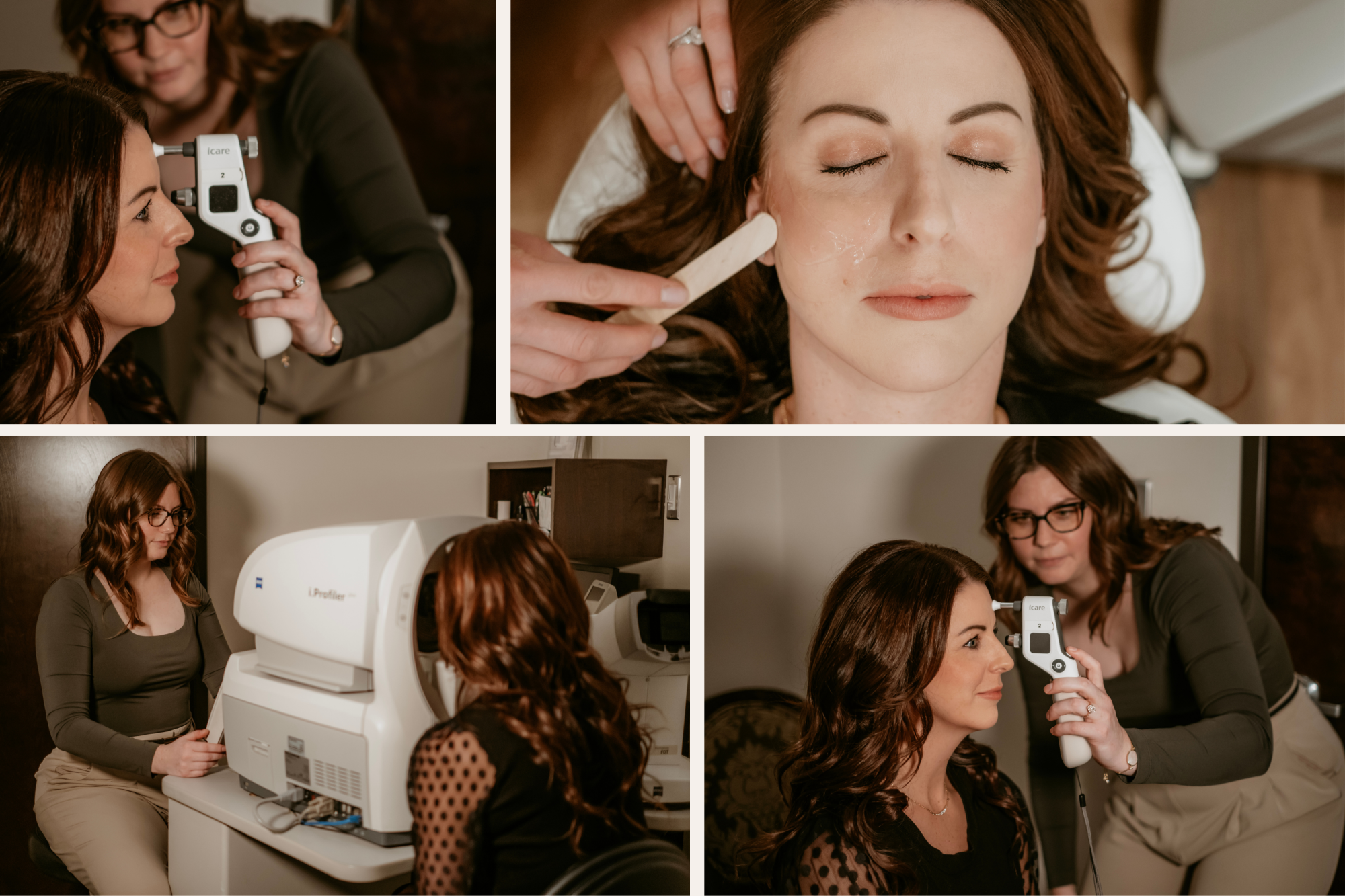
If your eye twitching has lasted more than a few weeks, or you’ve noticed any of the more serious signs above, book an appointment with our optometrists in Grande Prairie. Booking an appointment allows us to assess whether dry eye, eye strain, prescription changes, allergies, or another concern is contributing.

FAQ
How long does eye twitching usually last?
Most cases of benign eye twitching, also called myokymia, resolve on their own within a few days to a couple of weeks. If twitching persists beyond 2 to 3 weeks, it’s worth booking an eye exam.
Can stress cause eye twitching?
Yes. Stress is one of the most common triggers of eyelid twitching. Fatigue, caffeine, and anxiety can all contribute to the involuntary muscle spasms that cause the flutter.
Is eye twitching serious?
In most cases, no. Benign eyelid twitching is usually linked to lifestyle factors like stress, poor sleep, too much caffeine, eye strain, or dry eyes. If twitching spreads to other facial muscles, causes the eyelid to close completely, or comes with vision changes, see an optometrist.
Can dry eyes cause eye twitching?
Yes. Dry, irritated eyes can trigger eyelid spasms. If your twitching is paired with gritty, watery, burning, or tired-feeling eyes, dry eye may be a factor.
When should I see an optometrist for eye twitching?
Book an appointment if your twitching has lasted more than 2 to 3 weeks, spreads to other parts of your face, causes your eyelid to close, or comes with redness, discharge, swelling, or vision changes.